


ICTF Conference 2026
Agenda
| Start | End | Description | |
|---|---|---|---|
| 08:30 | 09:15 | Registration, Pastries, Tea/Coffee and Networking | |
| 09:20 | 09:30 | Welcome and Introduction | |
| 09:30 | 09:45 | David White - Chief Digital & Information Officer | |
| 09:45 | 10:40 | Plenary 1 - The Schwarzman Centre Managing Change Collaboratively | |
| 10:45 | 11:30 | Breakout Session A | |
| 11:30 | 12:00 | Morning Tea/Coffee and Networking, Suppliers and Colleagues | |
| 12:00 | 12:55 | Plenary 2 - Hope Is Not a Strategy: Getting Real About Cyber Security | |
| 12:55 | 14:10 | Lunch - Networking Suppliers and Colleagues | |
| 14:10 | 14:55 | Breakout Session B | |
| 15:00 | 15:45 | Breakout Session C | |
| 15:45 | 16:15 | Afternoon Tea/Coffee and Networking Suppliers and Colleagues | |
| 16:15 | 17:10 | Plenary 3 - MRI – A Tool for Innovation and Discovery | |
| 17:10 | 17:15 | Chair Closing & Thanks | |
| 17:15 | 17:30 | Travel to Evening Venue |
5 minute gaps are left between the end of some items and the start of the next to allow for travel time.
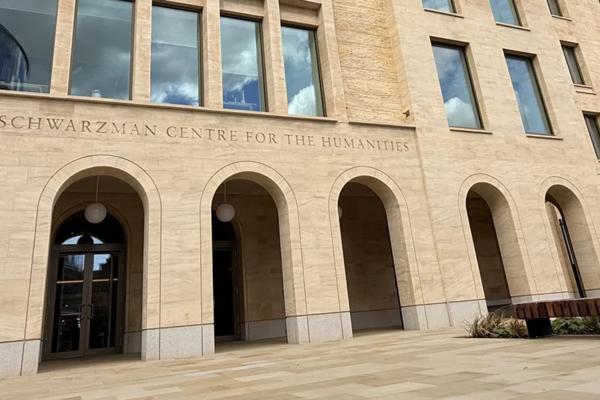
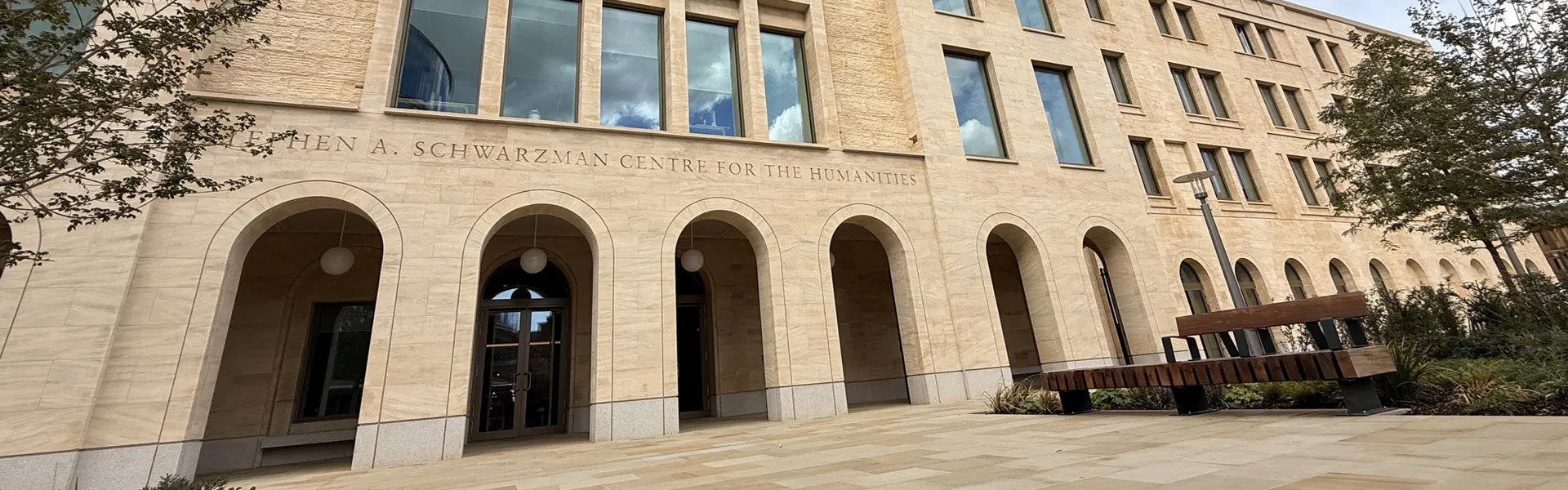
The move into the Schwarzman Centre was, perhaps, the biggest change that the Humanities in Oxford have seen in centuries. Moving from 22 buildings across to the city into one was a complex and challenging programme spanning not only multiple Faculties but also many functions. This session will introduce how a truly cross-university collaboration was at the heart of the successful delivery of the programme and continues to underpin change in the Division.
Cyber security doesn’t fail for lack of tools—it fails when organisations rely on hope instead of hard choices.
In this presentation, Chris Mortlock, Interim CISO at University of Oxford, examines the gap between cyber strategy and operational reality in complex, federated institutions. Drawing on real incidents and cross-sector experience, he will explore why traditional models struggle to deliver and how culture, behaviour, and engagement ultimately determine success.
Looking ahead, the session sets out a clear, practical direction for the next 3–5 years and invites discussion on how leaders can move beyond compliance-driven approaches to build security that works in practice, at scale.
MRI – A Tool for Innovation and Discovery - Professor Stuart Clare, Oxford University Centre for Integrative Neuroimaging
Magnetic Resonance Imaging (MRI) has deep roots in Oxford, with early developments leading to a University spin-out that became a major global manufacturer of superconducting magnets used in MRI scanners worldwide.
Today, innovation continues both in the technology itself and in how MRI is used to explore and understand the human brain. In this session, Professor Stuart Clare will introduce the principles behind MRI and reflect on how the technology has evolved over time, from early research to its current role as a critical tool in scientific discovery.
Drawing on examples from Oxford, the session will also highlight how complex, high-precision systems like MRI are developed, delivered, and used in practice, offering insight into what it takes to make advanced technology reliable, usable, and impactful in real-world environments.
Presented by Richard Carpenter
Breakout Session Description:
As the Schwarzman Centre for the Humanities takes shape, Richard Carpenter (Technical Lead, Humanities IT) charts the Humanities division's shift from traditional Active Directory to an Entra-first world (printing, file shares, endpoint management etc.) and reflects on the lessons that have been learned along the way.
Presented by Xavier Laurent, Zoe Case and Ronald Haynes
Breakout Session Description:
This breakout session will explore how universities can build confident, connected and responsible communities around artificial intelligence.
The session brings together the University of Oxford’s AI Competency Centre, members of Oxford’s AI Ambassador network, and AI-engaged colleagues from the University of Cambridge. It follows engagement between the Oxford and Cambridge groups at the [COGEnT - HELD consortium] (https://www.cogent-held.org/) in Cambridge in [February 2026] (https://tinyurl.com/HE-AI-26), where colleagues discussed shared approaches to developing AI capability, community learning, and professional practice across higher education.
Presented by Vishal Francis
Vishal is a senior leader at the University of Oxford’s Department of Physics, where he serves as Head of Oxford Physics Technical Excellence Centre (OPTEC). In this role, he directs a wide range of multi-discipline specialist technical facilities and leads expert teams that support cutting-edge research across the department, University, academia, and industry.
With a background in mechanical engineering and professional accreditation as a Chartered Engineer and Fellow of the Institution of Mechanical Engineers, Vishal has extensive experience working on high-profile national and international scientific projects. His work spans major national and international collaborations linked to CERN, the Diamond Light Source, Neutrino physics, Dark Matter, contributions to the National Satellite Test Facility, and involvement in space projects supported by the Science and Technology Facilities Council (STFC/UKRI). Notably, he played a key role in delivering the largest environmental space test facility chamber in the UK, enabling advanced testing of spacecraft and space instrumentation, and introducing disruptive technologies to bring new ways for testing in the UK.
Known for bridging academic research and large-scale engineering, Vishal plays a central role in enabling world-leading physics and space science through technical innovation, precision engineering, and collaborative project leadership.
Breakout Session Description: An overview of the range of large scale projects and some of the activities in the department e.g., quantum type, and the impact of our technical teams.
Presented by Kevin Elliott
Breakout Session Description: What if the most powerful technology we have isn’t digital? In this engaging and practical session, Kevin Elliott introduces a simple structural approach to making change, consequence and decision-making visible in everyday communication.
Drawing on insights from history and modern thinking, he demonstrates how to bring clarity and momentum to reports, emails, business cases and presentations. Join Kevin and his three glamorous (but fictional) assistants to discover how to make your communication clear, memorable and persuasive.
Presented by Dave Freeman and Darren Collins
Breakout Session Description:
The SDM Service will soon be live for University ITSS to manage their devices on. It's Intune and it's on Nexus365. It's been a while to get here, but the hard work is paying off. What will it mean to you? Join this session to find out the latest!
Presented by Ronald Haynes
Breakout Session Description: Does technology distance us from reality or enhance our understanding of it? Virtualisations help make systems smarter, more resilient, and more power efficient. While AI can make interfaces more human-like, there are risks from algorithmic harm. Collaborative standards for 3D, XR, spatial computing and virtual worlds, however, help us share and preserve better understanding of our world. Digital twins enable us to engage, test, monitor, and preserve many aspects of our world’s built and natural environments. Complementing this is a developing framework for memory twins, enhancing digital heritage by integrating multi-dimensional portrayals of material, historical, and social details. The combinations help realise the important FAIR (Findable, Accessible, Interoperable, Reusable) and CARE (Collective Benefit, Authority to Control, Responsibility, Ethics) principles, ensuring robust interoperability.
Presented by Sarah Zama
Breakout Session Description: The W3C Web Sustainability Guidelines provide a shared framework for making more responsible web decisions — without aiming for perfection.
This interactive session introduces the guidelines, explains why they matter, and focuses on a small number of practical examples across design, development, infrastructure, and strategy. Participants will be encouraged to reflect on where sustainability already fits into their work, and where it could be made more explicit.
Presented by Paul Greenley
Paul has more than 40 years of Data Centre Operations experience in running, outsourcing, and delivering data centre services as well as managing, directing and conducting strategic planning for data center facilities.
He has worked across the globe, including many years in the government in the U.K., and with large companies in Canada and the U.S. He is a highly motivated individual, driven by challenge and motivated by results and cost savings.
Breakout Session Description: As the data centre market continues to expand, in line with swelling AI and cloud computing demands, business leaders like Vodafone have had to keep pace with innovation and the importance of scalable data infrastructure.
Data centres are at a critical juncture, given the AI/sustainability paradox. More than ever before, we are reacting to a global transformation of the data centre industry by balancing rapid innovation with environmental responsibility.
Our transformation has been driven by on-premises solutions for different Vodafone programmes. My job as principal senior manager of data centre operation, infrastructure & facilities is to ensure we can handle these demands, cool them properly, and avoid building outside.
Led by John Mead, Head of Technology, Social Sciences Division and Sue Roe Business Change Manager, IT Services
Breakout Session Description: Shared Infrastructure Services are already delivering impact across IT at Oxford. Join this interactive session as we reflect on our successes and explore opportunities; by sharing your experiences, surfacing challenges, and helping to bring your ideas to the next phase of our collaborative approach.
Presented by Matt Kieffer and Peter Micklem
Breakout Session Description:
SHORE is the new hybrid cloud platform underpinning the Hybrid Cloud service. This replaced the VIDAR platform and brought together VDC and hosted server customers with an enhanced self-service portal (HPE Morpheus).
We will cover the current capabilities for this service including hosting virtual machines, storage and also outline our future plans. We will demonstrate the Morpheus platform used to manage resources. Also covering briefly how to use AWS public cloud and our new offering Google Cloud Platform (GCP).
Presented by Richard Carpenter
Breakout Session Description:
Aggressive bot scraping has toppled websites big and small over the past year. Richard Carpenter (Technical Lead, Humanities IT) covers how scraping works, the tools used to fight back, and the difficult decisions that come with each approach. As well as a demo of both sides of the coin - the scraping and the defensive measures.
Presented by Riaz Khimji and Ronald Haynes
Breakout Session Description:
A practical, discussion-led session exploring how Oxford and Cambridge are approaching IT professional development in decentralised environments. Drawing on collaborative work through COGEnT and the “T-shaped” skills model, we’ll share what’s working, where the challenges remain, and invite discussion on how institutions can build sustainable CPD pathways.
Presented by Fan Yang-Turner Technical Lead - Cloud and Security; Nick Lysikov Cloud Systems Engineer
Breakout Session Description:
Kubernetes is the de facto platform for containerized web app deployments. All three leading cloud providers have their solution play out: GCP-Google Kubernetes Engine (GKE), AWS-Amazon Elastic Kubernetes Service (EKS) or Azure: Azure Kubernetes Service (AKS).
And now you have another option, VMware Tanzu, an enterprise distribution of Kubernetes running directly on top of our SHORE infrastructure supported by Cloud and Storage Services Team in IT Services.
Why Tanzu? It is designed for applications running inside Oxford Network, using University SSO login, integrated with University DNS server. Because Tanzu is integrated with vSphere, you gain “Infrastructure as Code”: storage is automatic, networking is automatic and load balancing is automatic. Want to know more? Please join us on this deep dive tech talk about Tanzu – Kubernetes on SHORE.
Presented by Dominik Lukeš
Breakout Session Description:
This session will provide IT professionals with a clear, practical understanding of AI agents—what they are, how they work, and why they are rapidly becoming the dominant paradigm in AI. Dominik will demystify agent architectures, highlight the real operational implications for IT services, and explore emerging challenges around cost, security, and infrastructure. Drawing on current developments and real-world examples, Dominik hopes to equip participants to think strategically about deploying and securing agent-based systems in a fast-evolving landscape where traditional chatbot use is quickly becoming obsolete.